
Titanium 40kJ vs 60kJ, Total Energy Planned Area by Area
Key takeaway: In Titanium lifting, 40kJ and 60kJ are less a number you pick before treatment and more a result that comes out after the face is planned area by area. When the face is small and sagging is concentrated in one or two spots, the total tends to land around 40kJ; when sagging spreads over a wide area and the skin is thick, it tends to come close to 60kJ. So the difference in effect comes down to the plan more than the number itself.

Picking the energy level first puts things in the wrong order
When you start looking into Titanium, your eye goes first to the energy levels listed on the price page. The difference in cost is obvious while the difference in effect is hard to see, so it is natural to lean toward the bigger number if you can.
But if you lock in 40kJ or 60kJ first and fit the face to that amount, one face can end up with spots that get too much energy and spots that get too little. The order should be the reverse. First work out how much each area needs, and that sum comes out to 40kJ on some faces and 60kJ on others.

This article is for anyone hesitating over energy levels before a Titanium treatment, and it explains how a face that comes out at 40kJ differs from one that comes out at 60kJ. I believe that number should already be set by the plan before you walk into the treatment room.
kJ is not intensity but a total to be divided up
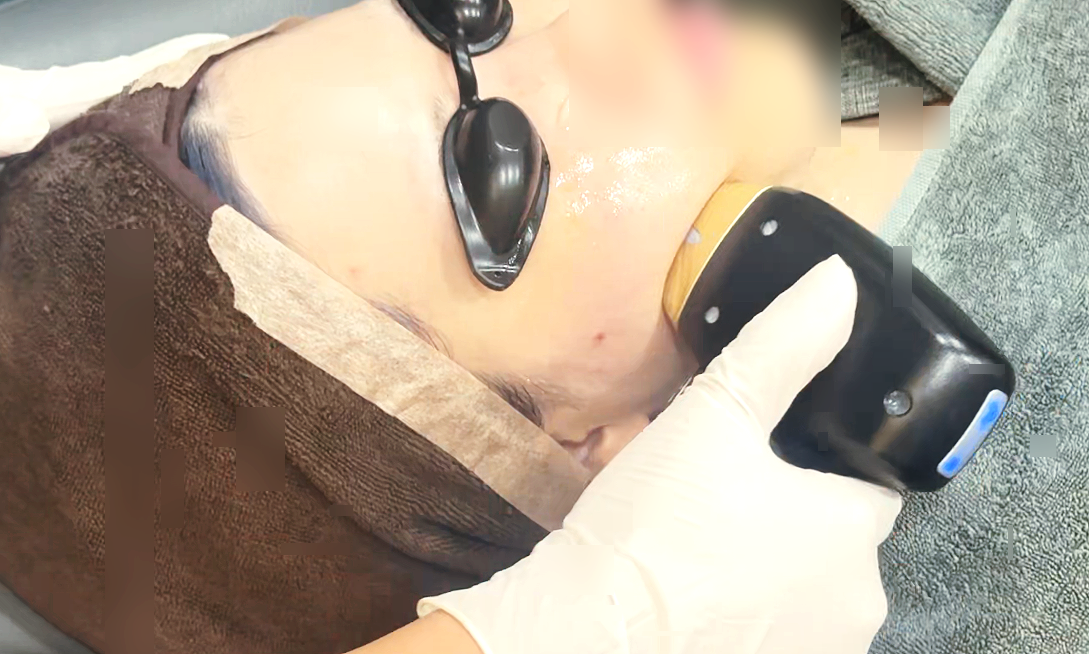
Titanium is a lifting device based on diode lasers. Here, kJ (kilojoules) refers to the total of all the energy delivered to the face during one treatment. So the difference between 40kJ and 60kJ is not about whether each pass goes in stronger, but closer to how much energy is divided and distributed across the whole face.
It is easy to expect the effect to grow as the number grows, but energy beyond what is needed can remain as a burden on the skin. That is why I decide the distribution by area before treatment. Once you separate the places to put real force into, the places to skim lightly and the places to leave empty, the total needed usually sorts itself out.
Comparing faces that come out at 40kJ and 60kJ
Using the total that comes out after the area-by-area plan as the basis, here are the two types side by side.
| Criterion | Face that comes out around 40kJ | Face that comes out close to 60kJ |
|---|---|---|
| Face area | On the smaller side, so the area to cover is narrow | Wide area to cover, including the jawline, cheeks and forehead |
| Extent of sagging | Concentrated in one or two spots, such as the jawline or around the mouth | Spread throughout, from around the mouth to the side of the cheeks and around the eyes |
| Skin and volume | Thin or low in volume, so many spots are left empty | Thick, with enough volume to support it |
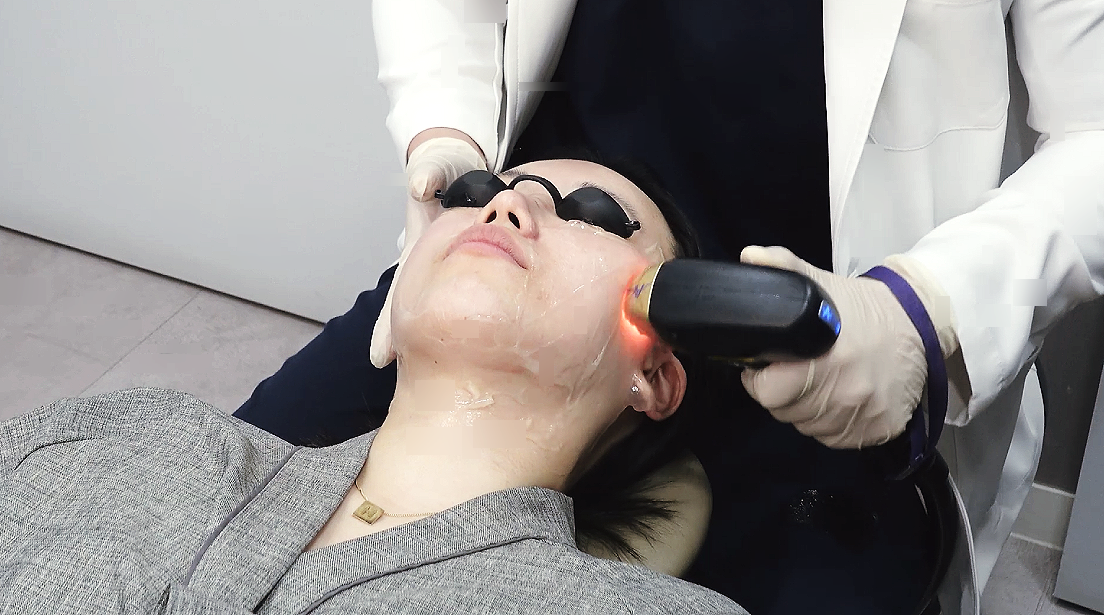
On a 40kJ-type face, the area to cover is narrow, so even when you add up what each area needs, the total does not grow much. If you force 60kJ into a face like this, the same spots get passed over again and again, and the burden on the skin can grow accordingly. If sagging is only along the jawline or around the mouth, the plan is often complete once enough force goes into those spots and the rest is lightly refined. There is no reason to add energy to areas that are not a concern.
On a face where the cheeks are thin or hollowing is a worry, more energy can actually make the face look gaunter. As more spots are left empty, the total goes down too, and putting 60kJ into such a face is closer to piling burden onto places that do not need it.



Conversely, if a 60kJ-type face receives only 40kJ, the amount may be too little for the wide area, and one area may be left lacking. A wide area means the total rises just to keep the same density, and when sagging has spread to around the mouth, the side of the cheeks and around the eyes, adding up what each area needs often brings the total close to 60kJ. A face with thick skin and ample volume can take energy with relatively more room in the same spot, and with fewer spots to leave empty, the planned total tends to be larger.
You should be able to explain where the extra 20kJ went
If the result is 60kJ, the difference only becomes meaningful when you can say how much of the extra 20kJ over 40kJ went to the jawline and how much went to the side of the cheeks. Even at the same 60kJ, scattering it evenly over the whole face and concentrating it where it is needed are completely different Titanium treatments.
At O.N Clinic, before treatment we check skin condition with an AI skin analyzer, look at the face from the front and the side to decide the extent of sagging and where to focus, and then set the total. Instead of fitting the face to an energy level, the total follows after we have looked at several factors.
Possible reactions after treatment, and a summary
After a Titanium treatment, redness, swelling and temporary warmth may appear, and in rare cases side effects such as burns or pigment changes can occur. Effects and recovery vary with skin condition, age and treatment conditions, so no specific result can be promised.
My answer to the question of how 40kJ and 60kJ differ in effect is that the difference comes from the plan. For a small face with localized sagging, 40kJ may suit; for a wide face with overall sagging, 60kJ may suit. Comparing energy levels has its place, but I recommend first checking how many kJ come out when your own face is planned.
Frequently asked questions
My face is small, so will a lower energy level be less effective?
For a face with a small area, even adding up what each area needs tends not to produce a large total. What tends to matter more for the result is how much energy is gathered where it is needed, rather than the total itself.
I have little cheek fat. Won't I look even gaunter after lifting?
When a lot of energy goes into a face with little volume, hollowing can become more noticeable. That is why the spots that need care are left empty from the start of the plan, and it is a good idea to point out together, before treatment, the areas where you worry about hollowing.
Can I decide on the energy level I saw on the price page before I visit?
You can use it as a reference, but the amount actually needed depends on the face area and the extent of sagging. It is safer to decide after checking how much each area needs.
Visiting and consultation
O.N Clinic is near Gangnam Station, so it is easy to reach by subway.
If you are torn between Titanium 40kJ and 60kJ, think ahead about the sagging area that bothers you most and the spots where you worry about hollowing. It makes the consultation to set the area-by-area plan together much easier. Feel free to leave any questions through Chat with us now.
Written by Dr. Oh Seung-min (Representative Director of O.N Clinic, graduate of Seoul National University College of Medicine, Academic Committee Chair of the Korean Society for Laser, Skin and Hair). You can find his full background on the medical team page. First published 2026-11-10, last reviewed 2026-11-23
This article is for general information only, and the appropriate treatment and results may vary depending on each individual's condition.
More stories
Related articles for further reading.

Oligio XM HIFU vs RF: Which Mode Fits Your Face
HIFU and RF in Oligio XM are not rivals in strength but two methods that reach different depths, so we choose and divide them according to where sagging starts and how much volume each face has.

Vertical Neck Lines and Radiesse: Check Whether Muscle or Skin Is the Cause First
Whether Radiesse suits vertical neck lines depends on which weighs more: the bands formed by the neck muscle or thinning, loosened neck skin.

Oligio Reviews and Lifting Zones: Where to Focus, Refine, and Protect
Why Oligio reviews split between natural and awkward results, explained through three facial zones: areas to focus on, areas to refine and areas to protect.

Titanium Lifting Combined with Gouri Booster: What the Combination Does
Titanium lifting handles the face line and the Gouri booster the skin foundation, so combining them divides different concerns rather than doubling the effect.

Alltite 400 Shots in One Session: Results and How Shots Are Distributed
The result of a single 400-shot Alltite lifting session depends less on the number than on how far sagging has progressed and how the 400 shots are divided across the face.

Pain and Results in Thermage Reviews: Energy Adjustment Is the Key
The pain often mentioned in Thermage reviews is not something to simply endure but a guide for setting intensity, and results are best viewed as a same-day change and a change around one month later.